
Germanium Metal Supplier – High-Purity Ge for Infrared Optics, Fiber Optics & Semiconductors
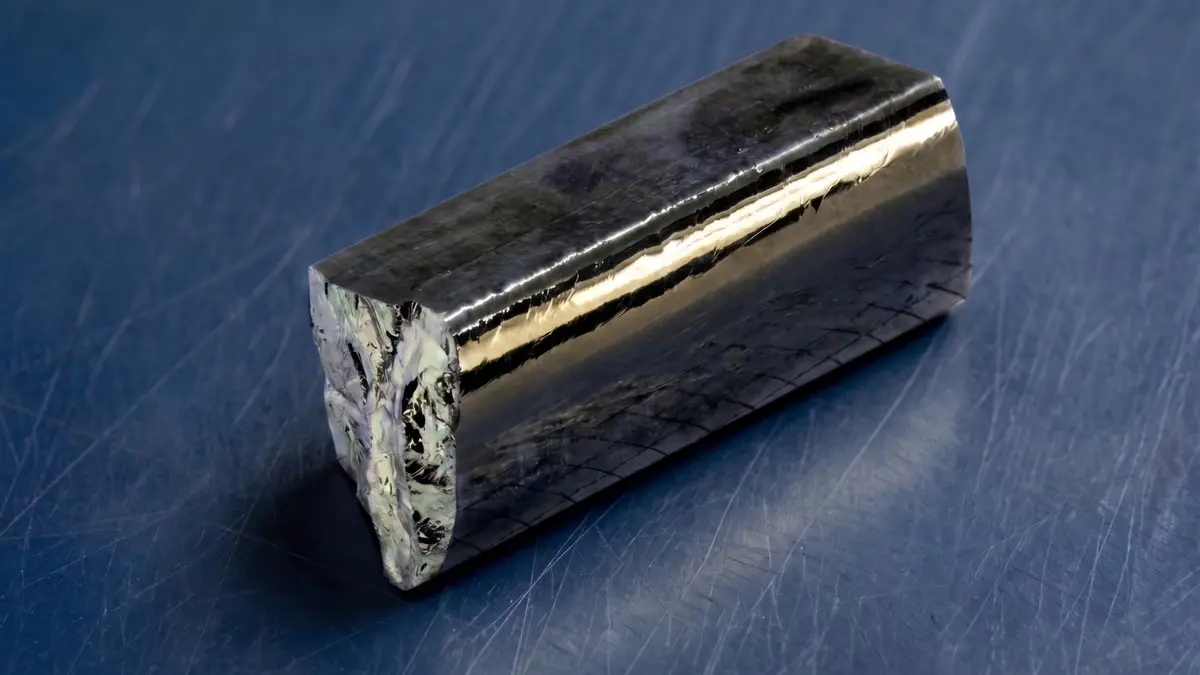
Germanium Metal Supplier – High-Purity Ge for Infrared Optics, Fiber Optics & Semiconductors
Germanium (Ge, atomic number 32) is one of the most strategically significant critical raw materials of the modern era. Originally the foundation of the first transistors in 1947, germanium today underpins night vision systems, fiber optic networks, concentrator photovoltaics, and infrared imaging across defence, telecommunications, and industrial sectors.
Fortis Metals is a trusted global supplier of high-purity germanium metal, germanium dioxide (GeO₂), and related compounds, serving manufacturers of infrared optics, fiber optic preforms, semiconductor wafers, and industrial catalysts worldwide.
---
Why Germanium Is a Critical Raw Material
Germanium is classified as a Critical Raw Material by the European Union, the United States, Japan, South Korea, and the United Kingdom. It is not mined directly in commercial quantities; instead, it is recovered as a byproduct of zinc smelting and coal fly ash processing, making global supply structurally constrained and geographically concentrated.
China accounts for approximately 60% of global germanium production. In August 2023, China introduced export licensing controls on germanium — simultaneously with gallium — triggering urgent supply chain diversification among defence contractors, optics manufacturers, and semiconductor companies in Western markets.
For buyers in NATO countries, Japan, South Korea, and Australia, qualifying a reliable non-China or multi-source germanium supply has become a critical procurement priority.
---
Physical and Chemical Properties of Germanium
| Property | Value |
|---|---|
| Atomic Number | 32 |
| Atomic Weight | 72.630 g/mol |
| CAS Number | 7440-56-4 |
| Melting Point | 938.3°C (1,720.9°F) |
| Boiling Point | 2,833°C (5,131°F) |
| Density | 5.323 g/cm³ |
| Crystal Structure | Diamond cubic |
| Band Gap | 0.67 eV (at 300 K) |
| Refractive Index | ~4.0 at 10 µm (infrared) |
| Appearance | Lustrous, grey-white metalloid |
Germanium is a narrow-band-gap semiconductor with exceptional transparency in the 2–14 µm mid-wave and long-wave infrared range. Its high refractive index (~4.0) allows germanium lenses to be made thinner than equivalent optics in other materials, making it the dominant substrate for thermal imaging and FLIR systems. Germanium is also notable for its compatibility with silicon in strained-layer SiGe heterostructures used in high-speed bipolar transistors.
---
Purity Grades and Specifications
Fortis Metals supplies germanium metal and compounds across a full range of purity grades:
Zone-Refined Germanium (5N / 99.999%)
- Primary applications: Infrared optical elements (lenses, windows, domes), detector substrates, gamma-ray detector crystals, research
- Typical impurities: Total metallic impurities below 10 ppm; electrically active impurities below 1 ppm
- Forms available: Polycrystalline ingots (500 g to 5 kg), broken zone-refined pieces, wafers on request
- Resistivity: High-purity undoped Ge typically >40 Ω·cm
Electronic-Grade Germanium (4N5 / 99.995%)
- Primary applications: SiGe epitaxial growth substrates, solar cell germanium substrates (multi-junction concentrator PV), compound semiconductor precursors
- Typical impurities: Total metallic impurities below 50 ppm
- Forms available: Ingots, broken pieces, granules
Industrial-Grade Germanium Metal (4N / 99.99%)
- Primary applications: GeO₂ production feedstock, GeCl₄ synthesis, catalyst precursors, alloying
- Forms available: Ingots (1 kg standard), shots, powder
Germanium Dioxide (GeO₂) – CAS 1310-53-8
- Purity: 99.99% (4N) standard
- Appearance: White crystalline powder
- Primary applications: Fiber optic preform production (CVD dopant), infrared glass manufacturing, PET polymerisation catalyst
- Packaging: 1 kg, 5 kg, 25 kg sealed containers
Germanium Tetrachloride (GeCl₄) – CAS 10038-98-9
- Purity: Electronic grade, 99.999%
- Appearance: Colourless fuming liquid
- Primary applications: MCVD/OVD/PCVD fiber optic preform deposition (refractive index raising dopant), CVD thin films
- Packaging: Speciality stainless-steel cylinders; handled as a corrosive hazmat
All shipments include a Certificate of Analysis (CoA) with ICP-MS or GDMS test data. Lot traceability maintained throughout the supply chain.
---
Key Applications of High-Purity Germanium
Infrared Optics and Thermal Imaging
Germanium is the material of choice for infrared optical systems operating in the 8–14 µm long-wave infrared (LWIR) band — the primary atmospheric window for thermal imaging. Its refractive index of ~4.0 at 10 µm is the highest of any common IR window material, enabling compact, lightweight lens designs.
Key infrared applications:
- FLIR (Forward Looking Infrared) camera lenses and windows for defence and surveillance
- Thermal imaging cores for security cameras, firefighting, and industrial inspection
- Night vision goggles and driver-assisted systems
- Airborne reconnaissance pods and missile seekers
- Hyperspectral imaging instruments for remote sensing and satellite payloads
Germanium IR optics are typically AR-coated (diamond-like carbon or ZnS coatings) to reduce the high surface reflection caused by its elevated refractive index.
Fiber Optic Preforms
GeO₂ and GeCl₄ are essential dopants for raising the refractive index of the silica glass core in single-mode and multimode optical fibers. Without germanium doping, it is impossible to create the index contrast needed to guide light in modern low-loss silica fibers.
The global fiber optic industry consumes approximately 30% of total germanium supply, and demand is growing with the rapid expansion of data centre interconnects, 5G backhaul networks, and submarine cable systems.
Deposition methods using GeCl₄:
- MCVD (Modified Chemical Vapour Deposition)
- OVD (Outside Vapour Deposition)
- PCVD (Plasma Chemical Vapour Deposition)
- VAD (Vapour Axial Deposition)
Gamma-Ray Detectors (High-Purity Germanium / HPGe)
High-purity germanium crystals grown by the Czochralski or zone-refining method are used as radiation detector elements in nuclear physics research, medical imaging (PET/SPECT), environmental monitoring, and nuclear security applications. HPGe detectors offer the best energy resolution of any gamma-ray detector technology.
HPGe applications:
- Nuclear material accountancy and safeguards (IAEA inspections)
- Environmental radioactivity monitoring
- Astrophysics and particle physics experiments
- Compton cameras for medical imaging
Solar Cells — Multi-Junction Concentrator PV
Germanium substrates are used as the bottom junction and mechanical support in triple-junction concentrator photovoltaic (CPV) cells based on GaAs/InGaP/Ge architectures. These cells achieve efficiencies exceeding 40% under concentrated sunlight and are the power source for most satellites and deep-space probes.
CPV/space solar applications:
- Geostationary communication satellites
- LEO and MEO observation satellites
- Deep space probes (Mars rovers, outer planet missions)
- High-concentration terrestrial CPV installations
Silicon-Germanium (SiGe) Semiconductors
Strained SiGe epitaxial layers grown on silicon substrates enable higher electron and hole mobility than pure silicon, improving the performance of BiCMOS circuits, high-speed heterojunction bipolar transistors (HBTs), and 5G RF front-end chipsets.
SiGe applications:
- 5G mmWave transceiver chips
- Automotive radar (77 GHz ADAS sensors)
- High-speed optical networking (100G/400G transceivers)
- Precision analog circuits and ADCs
Polyethylene Terephthalate (PET) Catalyst
GeO₂ is an effective catalyst for PET polymerisation, producing clearer, higher-quality polyester than antimony-based catalysts and avoiding concerns over antimony leaching in food-contact applications. GeO₂ catalyst is used in premium PET bottle resin, polyester film, and high-clarity packaging materials.
Infrared Spectroscopy
Germanium ATR (Attenuated Total Reflection) crystals are standard sampling accessories in FTIR spectrometers. The high refractive index of germanium gives it a shallow penetration depth (~0.65 µm at 1,000 cm⁻¹), making it ideal for surface analysis of opaque or strongly absorbing samples in food science, pharmaceuticals, and polymer analysis.
---
Global Germanium Market Overview (2025–2026)
The germanium market is small, structurally tight, and highly sensitive to policy shifts in producing countries.
Supply landscape:
- Global refined germanium production estimated at 130–160 tonnes per year
- China accounts for ~60% of primary output; Russia, Canada, Belgium (via secondary refining) are secondary producers
- US primary production is minimal; strategic stockpile drawdowns supplement commercial supply
- Secondary recovery from scrap (GeO₂ from fiber optic manufacturing waste, recycled IR optics) is growing
Demand drivers:
- Data centre and hyperscaler expansion driving fiber optic preform demand
- Defence budgets increasing in NATO and allied nations, boosting thermal imaging procurement
- Satellite constellation deployment (LEO broadband) requiring Ge solar cell substrates
- 5G rollout sustaining SiGe chip demand
- CPV and space solar growth
Price and market context:
- Germanium metal prices have remained elevated since the 2023 Chinese export controls
- Zone-refined 5N Ge typically trades in the $1,200–$2,000/kg range (2025–2026)
- GeO₂ pricing is closely tied to metal prices with a refining premium
- Long-term supply agreements increasingly preferred by fiber optic and optics manufacturers
---
Packaging, Handling, and Shipping
Germanium metal is a brittle metalloid that fractures under mechanical stress; all shipments are padded appropriately.
- Ingots and broken pieces: Wrapped in anti-static foam, sealed in polyethylene bags, packed in rigid outer containers
- Powder and granules: Sealed in moisture-barrier bags inside rigid HDPE containers
- GeO₂ powder: Sealed in double polyethylene bags inside fibre drums; protect from moisture
- GeCl₄: Shipped in speciality stainless-steel lecture bottles or cylinders; classified as a corrosive hazmat (UN 1760 or specific GeCl₄ classification); handled by licensed dangerous goods carriers only
Documentation provided:
- Certificate of Analysis (CoA) with full elemental analysis
- Safety Data Sheet (SDS) per GHS/REACH
- Packing list and commercial invoice
- Certificate of Origin
- Export control classification (ECCN 1C231 for some grades; reviewed per destination)
---
Why Source Germanium from Fortis Metals?
Supply chain resilience: We work with qualified upstream refiners across multiple geographies, reducing dependency on any single source country. Our inventory management ensures consistent availability even during market disruptions.
Verified purity: All lots tested by ICP-MS (4N/4N5) or GDMS (5N zone-refined). We provide the full elemental analysis report, not a summary certificate. No shipment leaves without a matching CoA.
Broad product range: From industrial-grade Ge ingots to zone-refined 5N metal, GeO₂ powder, and GeCl₄ — one supplier for your entire germanium procurement.
Application expertise: Our team understands the specific purity requirements of fiber optic, IR optics, HPGe detector, and CPV applications. We can advise on grade selection, impurity specifications, and supply risk management.
Flexible order sizes: Research quantities from 100 g to multi-kilogram production lots and long-term framework agreements.
Global reach: We supply customers in North America, Europe, East Asia, Southeast Asia, and the Middle East, with established freight forwarding for both standard and hazmat shipments.
---